
Seeing a large bail amount on paperwork can cause immediate panic. A family may hear "$10,000 unsecured" and assume they must find $10,000 before their loved one can be released. In Delaware, that is usually not what an unsecured bond means.
An unsecured bond can allow release without money or property being posted upfront, but it still creates serious responsibilities. The defendant must attend court, follow every written release condition, and understand that the listed amount may become important after a missed appearance.
Quick answer: Unsecured bail in Delaware generally allows a defendant to be released without paying money or posting property before release. The defendant signs a bond promising to attend court and follow the release conditions. A dollar amount is still listed because the defendant may become responsible for it after failing to appear.
Legal information notice: This article provides general information about Delaware bail and is not legal advice. Court orders, procedures, and case facts vary. Follow the actual court paperwork and speak with a Delaware criminal defense attorney about legal strategy, warrants, missed appearances, or requests to modify bail.

What Is Unsecured Bail in Delaware?
Unsecured bail is a court-ordered form of pretrial release that normally does not require money or property before release. The court sets a dollar amount, and the defendant signs a bond promising to return for future proceedings and obey the written release conditions.
The word "unsecured" refers to the lack of financial security posted in advance. It does not mean the bond is unimportant, the charges have been dismissed, or the defendant can ignore future court dates.
Delaware court materials describe unsecured bail as a signed appearance obligation with a designated amount but no money or property required as security before release. You can review the official Delaware Courts overview of bail and bail bonds and the Justice of the Peace Court defendant information for public guidance.
Unsecured Bail at a Glance
| Question | Simple answer |
|---|---|
| Is money normally paid before release? | No |
| Is property normally posted? | No |
| Does the defendant sign a bond? | Yes |
| Must the defendant attend court? | Yes |
| Can written release conditions apply? | Yes |
| Does the listed dollar amount matter? | Yes |
| Does release end the criminal case? | No |
Why Does an Unsecured Bond Still Show a Dollar Amount?
The amount represents a financial obligation connected to the defendant's promise to appear. It is not normally an invoice that the family must pay before the defendant leaves custody.
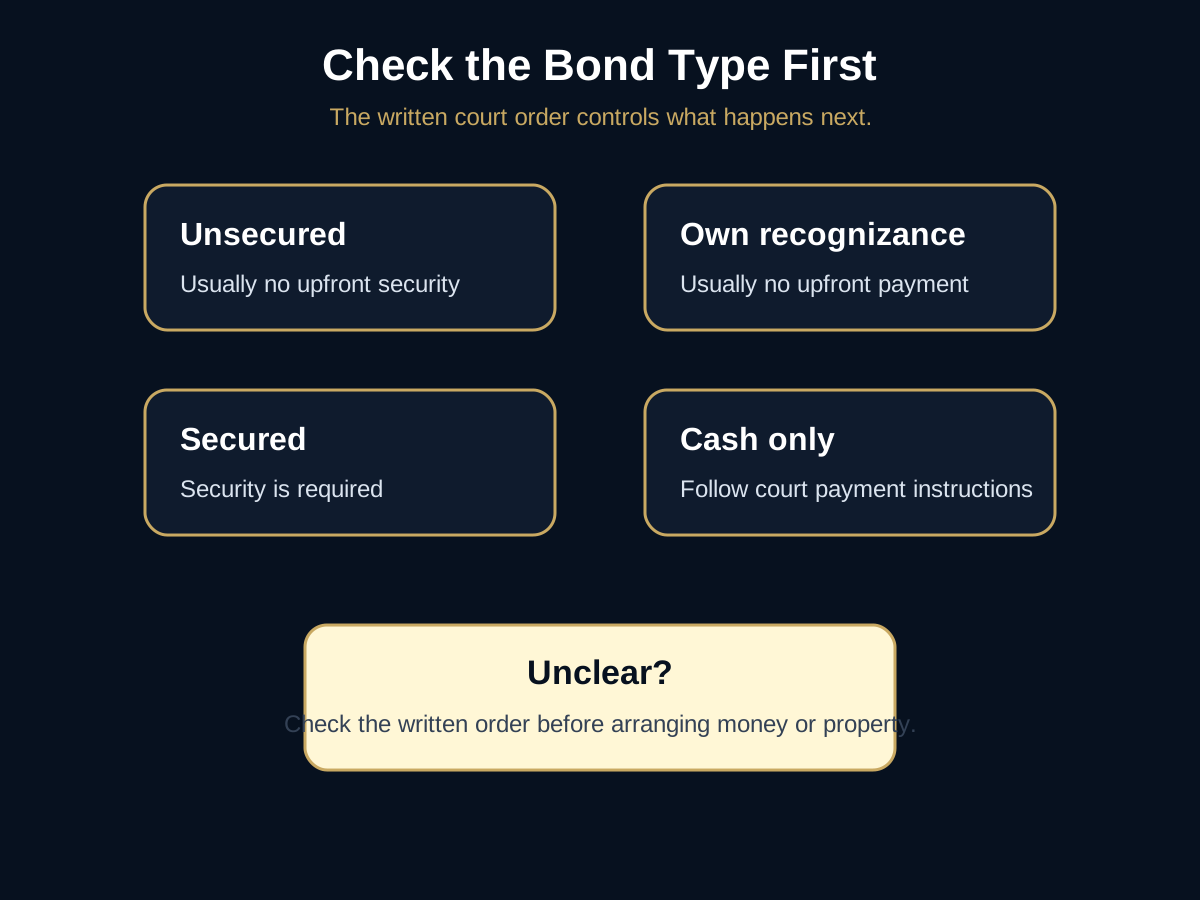
This distinction matters because families often hear only the amount, not the complete bond type. Hearing that "bail is $10,000" does not tell you whether the order is unsecured, secured, cash only, or another form of release.
- A $10,000 unsecured bond normally requires no security before release.
- A $10,000 secured bond requires approved money, property, or other permitted security.
- A $10,000 cash-only order requires payment according to the court's instructions.
Ask to see the exact written wording before arranging money, transferring property, or signing a private bail bond agreement. If you are still trying to confirm the amount or the type, read our guide on how to find out someone's bail amount.
Example: What a $10,000 Unsecured Bond May Mean
Hypothetical example - not advice about a specific case: Maria learns that her relative has a "$10,000 unsecured bond." She initially believes she must bring $10,000 before release. After checking the paperwork, she confirms that no security is required upfront. Her relative signs the bond, agrees to attend court, and must follow every written condition.

The $10,000 has not disappeared. It remains connected to the defendant's appearance obligation. Failure to appear can lead to financial liability and other court consequences. A document marked "secured" or "cash only" would require a different release process.
Do You Pay Unsecured Bail Upfront?
Usually, no. A Delaware unsecured bond normally does not require the defendant or family to pay the listed amount or post property before release. The defendant signs the court bond instead. No upfront payment, however, does not remove the duty to attend court and obey every condition.
Before you pay anything, slow down and confirm the exact order:
- Ask for the exact bond type shown on the paperwork.
- Confirm whether it says unsecured, secured, cash only, or own recognizance.
- Check whether money or property is specifically required before release.
- Read the listed amount and every written condition.
- Confirm the next court date and court location.
- Do not send money based only on a verbal statement about the amount.
- Keep a copy or clear photograph of the paperwork.
Not Sure Whether Money Is Due Upfront?
Call A Way to Freedom Bail Bonds before assuming money or property must be arranged. We can help you identify common bond terminology and practical next steps.
Call (302) 600-1886What Does the Defendant Promise on an Unsecured Bond?
The defendant promises to attend future court proceedings and comply with the release order. The lack of an upfront payment does not make those promises optional.
Delaware court guidance explains that bail is connected to a defendant's promise to appear and follow imposed conditions. Conditions can include court dates, contact restrictions, supervision requirements, address obligations, or other instructions listed in the release paperwork.
Can an Unsecured Release Still Have Strict Conditions?
Yes. "Unsecured" describes the financial structure of the release. A court may still impose written rules designed to address attendance, safety, or the integrity of the court process.
Depending on the order, conditions may address contact with another person, travel, reporting, supervision, or other case-specific conduct. The defendant should read the complete order and ask a criminal defense attorney about anything that is unclear.
How Does Unsecured Bail Compare With Other Delaware Bail Types?
Unsecured bail normally requires no money or property before release. Secured bail requires approved security, cash-only bail requires the payment ordered by the court, and own-recognizance release normally relies on the defendant's signed promise without the same designated unsecured amount.
| Bail type | Upfront money or security | Main practical obligation |
|---|---|---|
| Own recognizance or OR | Normally none | Sign a promise, attend court, and follow conditions |
| Unsecured | Normally none | Sign a bond tied to a stated amount and follow conditions |
| Secured | Required before release | Post approved security and comply with the bond |
| Cash only | Full ordered payment required | Pay according to the court order and attend proceedings |
Unsecured Bail vs. Secured Bail
The main difference is what must happen before release. Unsecured bail ordinarily requires the defendant's signature but no financial security upfront. Secured bail requires money, property, or another accepted form of security before release. Families dealing with this type of order can review how secured bail works in Delaware, Delaware surety bail bond help, and how a surety bond differs from unsecured bail.
Unsecured Bail vs. Cash-Only Bail
Unsecured bail normally requires no upfront payment. A cash-only order requires the designated payment to the court before release. Do not assume a private surety bond can replace a cash-only requirement; follow the wording and payment instructions in the court order.
Own Recognizance vs. Unsecured Bail
Both forms may allow release without upfront payment, but they are not identical. Under own recognizance, the defendant signs a promise to appear. Under unsecured bail, the defendant signs a bond connected to a designated amount that can become relevant after failure to appear.
Is Unsecured Bail the Same as a Signature Bond?
Delaware court materials may use "signature" near related bail terminology, but the exact label should be checked on the actual order. Do not rely only on someone saying "signature bond." Confirm whether the order specifically states own recognizance, unsecured, secured, or cash only.
A court-ordered unsecured release should also not automatically be confused with a private "no-collateral" product or commercial surety agreement. The court chooses the release type; a private company does not convert an unsecured court order into a different product.
Who Decides Whether Bail Is Unsecured?
A Delaware judicial officer decides the bail type, amount, and release conditions. A bail bond company cannot choose whether an order will be unsecured or promise that the court will grant unsecured release.
Depending on the applicable law and facts, the court may consider the alleged offense, appearance history, family and community ties, employment, financial resources, prior compliance, and concerns involving safety or the court process. Delaware Code Title 11, Chapter 21 contains the current statutory framework for pretrial release and bail. Review the current public text at Delaware Code, Title 11, Chapter 21.
Can Unsecured Bail Later Be Changed?
A court can reconsider bail or alter release conditions, but a bail agent cannot independently make that change. The procedure depends on the court and case. A Delaware attorney should advise on the correct procedure and legal strategy. Until a court changes the order, the defendant must continue following the existing terms.
For broader post-release guidance, review what being released on bond means in Delaware.
What Happens If You Miss Court on Unsecured Bail?
Missing court can lead to serious financial and legal consequences. The court may issue a warrant, order the defendant's arrest, cancel or change bail, consider financial consequences, and set different conditions for future release.
The exact result depends on the court, facts, and applicable law. The defendant should not assume that a new date will be issued automatically or that a bail company can resolve the matter without court action.
Missed court? Verify the case number and missed date, gather the signed paperwork, contact a Delaware criminal defense attorney promptly, and follow the court's instructions. Do not rely on anyone guaranteeing warrant removal.
Do You Need a Bail Bondsman for Unsecured Bail?
Usually, a commercial bail bond is not needed solely to fund an unsecured release. No money or property is ordinarily posted before release, so there may be nothing for an agent to finance or secure.
A local bail professional may still help a family identify unfamiliar terminology, distinguish unsecured from secured or surety language, and explain what information should be confirmed. A paid bail bond service may become relevant when the actual order requires an eligible secured or surety process.
| Professional | What they do |
|---|---|
| Court | Sets the bail type, amount, and release conditions |
| Bail bond agent | Explains practical bond terminology and eligible commercial posting options |
| Attorney | Advises on legal strategy, warrants, missed court, and bond modification |
A responsible bail professional should tell a family when a paid bail bond service may not be required. If the order is unclear, call before assuming money is due upfront or visit the contact A Way to Freedom Bail Bonds online page.
Seven Steps to Protect an Unsecured Release
- Save the paperwork. Keep the signed bond and release order in a safe place.
- Record every court date. Add each appearance to a calendar with reminders.
- Read every condition. Do not focus only on the dollar amount.
- Keep contact information current. Follow any court instructions about address or phone changes.
- Avoid guessing about payments. Confirm whether the order is unsecured, secured, or cash only.
- Ask for legal help when needed. A bail agent cannot give criminal defense advice.
- Call if the bond type is unclear. A Way to Freedom can help you organize the practical questions to ask next.
Local Delaware Help When the Bond Type Is Confusing
A Way to Freedom Bail Bonds helps families across Delaware understand practical bail terminology after an arrest. If the paperwork says unsecured, secured, cash only, or own recognizance and you are unsure what that means, call before arranging money or property.
We serve families looking for New Castle County bail bond help, Wilmington bail bond help, and Newark bail bond help. For charge-specific help, see felony bonds or misdemeanor bonds.
If the person is still in custody and you are trying to understand the entire release process, this guide on how to bond someone out of jail in Delaware may help.
Call A Way to Freedom Before You Arrange Money
If a listed amount looks scary, confirm whether it is unsecured, secured, cash only, or another court order before taking the next step.
Call (302) 600-1886Contact UsFrequently Asked Questions About Unsecured Bail in Delaware
Do you pay unsecured bail upfront in Delaware?
Usually, no. With unsecured bail, the defendant normally signs a bond without paying the listed amount or posting property before release. The listed amount still matters because it is tied to the promise to appear and follow release conditions.
What does a $10,000 unsecured bond mean?
It usually means $10,000 is the amount connected to the defendant's appearance obligation, not necessarily money that must be paid before release. If the defendant misses court or violates conditions, the amount and other court consequences may become important.
Is unsecured bail the same as own recognizance?
No. Both may allow release without upfront payment, but unsecured bail normally includes a stated dollar amount connected to the signed bond. Own recognizance is usually a promise to appear without the same unsecured amount structure.
Do I need a bail bondsman for an unsecured bond?
Usually not solely to fund the release, because no money or property is normally posted upfront. A bail professional may still help a family understand terminology, and a paid bond service may become relevant if the actual order is secured or allows a surety bond.
Can unsecured bail later be changed to secured bail?
A court may change the bail type, amount, or conditions after reviewing the case. A bail company cannot make that change. Speak with a Delaware attorney about legal strategy or a request to modify bond.
What happens if someone misses court on unsecured bail?
The court may issue a warrant, cancel or change bail, consider financial consequences, and set different conditions for future release. The defendant should contact a Delaware criminal defense attorney promptly and follow court instructions.
Does unsecured release mean the criminal case is over?
No. Unsecured release only allows the defendant to remain outside custody while the case continues, subject to the signed bond and any written conditions. Court appearances are still required unless the court says otherwise.
Final Thoughts
Unsecured bail can be a relief for families because money or property is usually not required before release. But it is still a serious court order. The defendant must appear in court, follow every condition, keep paperwork organized, and get legal guidance when court issues arise. Before paying anyone or arranging property, confirm the exact bond type in writing.