
If you are trying to understand what a surety bond in jail means, start with the basic idea: a surety bond is a financial guarantee connected to a defendant's bail obligations and future court appearances. In Delaware, a licensed surety bail agent may arrange a surety bail bond through an authorized surety insurer when that type of arrangement is appropriate.
For families, the terminology can be confusing because bail, secured bail, cash-only bail, and a surety bond are related but do not always mean the same thing. This guide explains how a surety arrangement may fit into the Delaware bail process, what to check before arranging a bond, how costs can work, and what responsibilities continue after release.
Quick Answer: What Is a Surety Bond in Jail?
In a Delaware jail and bail context, a surety bond provides financial backing for a defendant's bond obligations rather than resolving the criminal case itself. The defendant remains responsible for required court appearances and applicable release conditions. A commercial surety arrangement may involve a licensed bail agent and should not automatically be confused with cash bail.
What Does a Surety Bond Mean When Someone Is in Jail?
A surety bond in jail generally involves financial backing for the defendant's bail obligations. The defendant still has to appear for required court proceedings and follow applicable release conditions. The surety arrangement helps provide the financial security connected to the bond; it does not make the underlying criminal case disappear.
Delaware Courts describes a bail bond as a written guarantee that a defendant will attend further court proceedings. Delaware court guidance also explains bail as security used to help ensure the defendant's later appearance. Posting a bond addresses release under the court's bail requirements, not the outcome of the criminal charges. See Delaware Courts bail and bail bond guidance.
Who Is Involved in a Commercial Surety Arrangement?
For a family trying to understand the process, it helps to think about three sides: the defendant, the court, and the surety side. The defendant has appearance and compliance obligations. The court sets and administers the applicable bail requirements. On the commercial surety side, Delaware law defines a surety bail agent as a licensed person acting under an appointment from an authorized surety insurer to sell, solicit, or negotiate surety bail bond insurance.
How Does a Surety Bond Work After an Arrest in Delaware?
The exact process depends on the defendant's case, the court, and the type of bail ordered. In general, bail and release conditions are determined first. The bond type and amount must then be confirmed. Delaware Courts identifies Own Recognizance, unsecured, secured, and cash-only bail as primary bail types.
If secured bail applies, the required security may be posted by the defendant or by someone acting on the defendant's behalf. Delaware Courts notes that this can include a relative or a bail bondsman. When a commercial surety arrangement is used, the required agreement and bond paperwork must be completed before the bond is posted.
Posting a bond should not be confused with a guaranteed immediate release. Release processing can depend on the court, correctional facility, bond acceptance, release order, and the circumstances of the case. For Court of Common Pleas matters, Delaware Courts explains that a detained defendant is released after the correctional facility receives the court's release order.
What Should You Check Before Trying to Post the Bond?
Before focusing on payment, make sure you understand what the court has actually required. A bail amount by itself does not necessarily tell a family what must be paid to a bail bond company.
- Confirm the defendant's correct identifying and case information.
- Confirm the court and current custody information.
- Check the bail or bond type and the amount that has been set.
- Determine whether security is required before release.
- Review known release conditions.
- If using a bail agent, understand the written agreement, premium, payment terms, and any collateral arrangement before signing.
Is a Surety Bond the Same as Secured Bail in Delaware?
Not exactly. Secured bail is a type of bail ordered by the court, while a commercial surety arrangement can be a way of providing financial backing in connection with the required bond. Delaware Courts explains that secured bail in Delaware requires a designated amount of money or qualifying security to be posted before release.
Families should avoid using “surety bond” and “secured bail” as if they always mean the same thing. First confirm the bail type the court ordered. Then determine how the required security may be satisfied in that situation. For a deeper comparison, read our guide to secured bail vs. cash-only bail in Delaware.
Practical Note from A Way to Freedom Bail Bonds: When a family hears a bail amount, confirm both the bond type and the amount before assuming what must be paid. Secured bail, cash-only bail, and a commercial surety arrangement can involve different financial requirements.
Surety Bond vs. Cash Bail: What Is the Practical Difference?
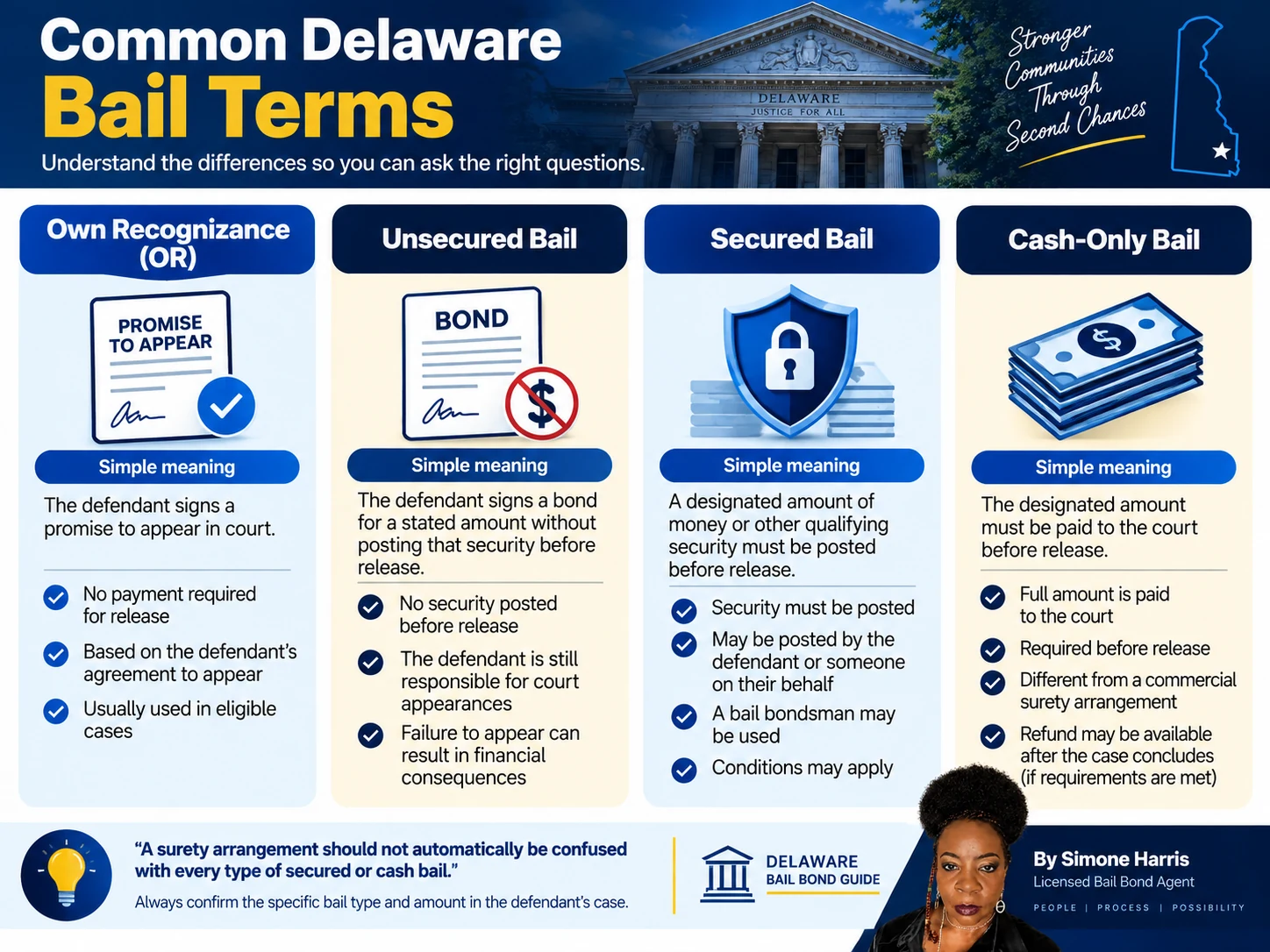
The practical difference is mainly about how the court's financial requirement is being satisfied. With cash-only bail, the designated amount must be paid to the court before release. With secured bail, money or other qualifying security must be posted, and a bail bondsman may be used when appropriate.
A commercial surety bond involves a contract and premium with the bail bond provider. That premium should not be confused with money paid directly to the court as cash bail.
| Term | Simple meaning | Security before release? | Bail agent |
|---|---|---|---|
| Own Recognizance | Promise to appear | No payment required for OR release | Generally not needed |
| Unsecured Bail | Bond for a stated amount without posting that security first | No security posted before release | Generally a different situation |
| Secured Bail | Money or qualifying security must be posted | Yes | A bail bondsman may be used |
| Cash Only | Designated amount paid to the court | Yes | Different from an ordinary commercial surety arrangement |
How Much Does a Surety Bond Cost in Delaware?
There is not one percentage that should be assumed for every surety bond in Delaware. Under current Delaware law, surety bail bond rates are subject to filed and approved rates. For a surety bail bond over $1,000, the total filed premium must be at least 5% and no more than 10% of the surety bail bond amount.
Delaware law also states that a bail agent cannot post a surety bail bond without first charging and receiving at least 5% of the surety bail bond amount and entering into a written contract signed by the parties containing the terms and conditions of the bond. Read more about how much a bail bond costs in Delaware.
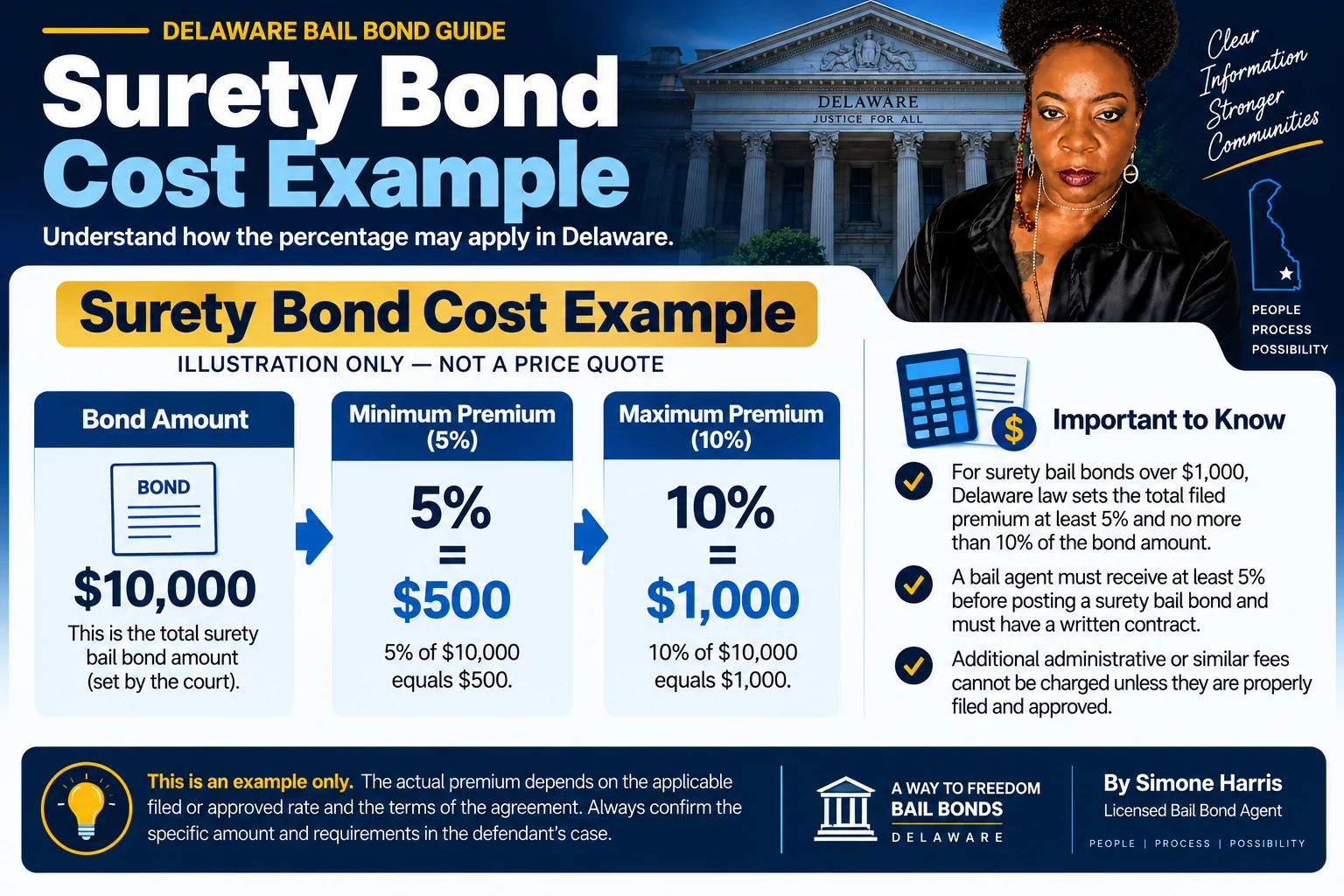
Cost Example - Illustration Only: If a qualifying surety bail bond amount were $10,000, 5% would equal $500 and 10% would equal $1,000. This explains the percentage calculation only and is not a price quote.
Collateral can also be relevant. Delaware law recognizes collateral as money or other property pledged as security or surety for a bail bond and establishes requirements governing a bail agent's handling of collateral.
What Responsibilities Continue After Release on a Surety Bond?
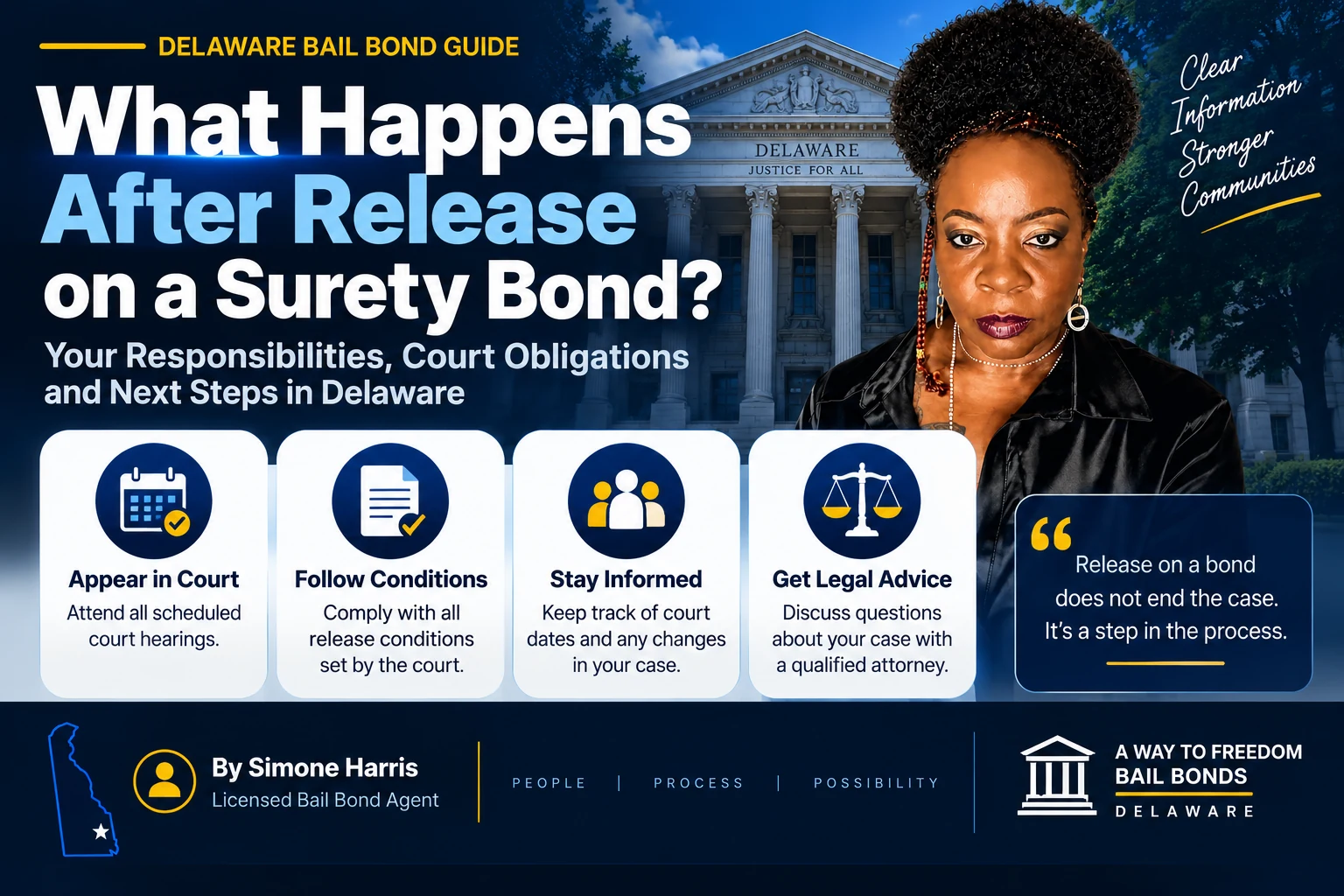
Release on a bond does not end the defendant's responsibilities. A central purpose of the bond is to help ensure that the defendant appears for required court proceedings. Bail can also include release conditions that apply to the individual case.
Anyone signing or entering a bail bond agreement should understand both the court obligations and the terms of any separate agreement with a bail bond provider. Keep track of court information, follow applicable release conditions, and direct questions about criminal charges, defenses, or legal strategy to a qualified attorney.
What Can Happen If the Defendant Misses Court?
Missing a required court appearance can have serious bond consequences. Delaware Courts states that a defendant who fails to appear risks having bail forfeited. Depending on the applicable bond and circumstances, money or property posted may be subject to forfeiture, and additional financial obligations may arise.
The exact consequences depend on the case and the applicable bond. Families should not assume that every missed appearance produces an identical financial or procedural result.
Surety, Secured, Unsecured, and Cash Bail: Don't Mix Up the Terms
- Surety bond: A bond arrangement involving a surety that provides financial backing for the applicable obligation.
- Secured bail: A Delaware bail type requiring money or qualifying security to be posted before release.
- Unsecured bail: The defendant signs a bond for a designated amount but does not post money as security before release. Learn more about what unsecured bail means in Delaware.
- Cash-only bail: The designated amount must be paid to the court before release.
When Should a Family Contact a Delaware Bail Bond Agent?
It may be useful to contact a Delaware bail bond agent after bail has been set and you need help understanding whether a commercial bail bond can be used, what the applicable premium and agreement involve, or whether collateral may be requested.
A Way to Freedom Bail Bonds can provide information about its surety bond services in Delaware and bonding process. You can also review how to bond someone out of jail in Delaware before signing paperwork.
Need help understanding a Delaware surety bond?
A Way to Freedom Bail Bonds can explain its bonding process, written terms, and information needed to get started.
Ask About a Surety BondFrequently Asked Questions About Surety Bonds in Jail
What is a surety bond for jail in simple terms?
A surety bond for jail is a financial guarantee used in connection with bail. A surety provides financial backing for the bond while the defendant remains responsible for required court appearances and applicable release conditions.
Do you pay the full bail amount with a surety bond?
Not necessarily. A commercial surety arrangement can involve paying a premium rather than personally depositing the entire bail amount with the court. The exact requirements depend on the bond, rate, agreement, and whether collateral applies.
Is a surety bond fee refundable?
A commercial bail bond premium should not be confused with cash or property posted directly with the court. Review the written agreement so you understand what you are paying and what terms apply.
Can collateral be required for a surety bond?
Collateral may be part of a bail bond transaction. Whether collateral is required depends on the circumstances and agreement.
How long does release take after a surety bond is posted?
There is no responsible way to promise one release time for every Delaware case. Processing depends on the court, correctional facility, bond acceptance, release order, and case circumstances.
Understanding Your Next Step After a Surety Bond Is Set
If you are trying to understand what a surety bond in jail means for a family member in Delaware, start by confirming the actual bail type, amount, court information, and release conditions rather than relying on the bond amount alone. A surety arrangement may provide a way to meet an applicable financial requirement, but the defendant still has continuing court obligations and the family should understand the premium, contract, and any collateral before signing.
This article provides general educational information about bail and surety bonds in Delaware and is not legal advice. For help with the next bond question, contact A Way to Freedom Bail Bonds.
Helpful Delaware resources: Delaware Courts - Bail & Bail Bonds | Delaware Code - Bail Bond Agents